




Kiln Dried Oak Logs vs Seasoned Wood: Which Burns Better?
Choosing the right firewood makes a noticeable difference to heat output, efficiency, and overall experience. Two of the most popular options are kiln dried oak logs and seasoned wood. While both are commonly used for fireplaces and wood-burning stoves, they perform quite differently. Understanding these differences will help you choose the option that best suits your heating needs.
What Are Kiln Dried Oak Logs?
Kiln dried oak logs are dried in a controlled kiln environment where temperature and airflow are carefully managed. This process rapidly reduces moisture content, usually to below 20%, making the wood ready to burn immediately. Because the drying process is consistent, the logs have uniform quality and reliable performance.
Due to their low moisture levels, kiln dried oak logs ignite quickly, burn hotter, and produce a steady flame. This makes them ideal for people who want high efficiency and minimal effort when lighting a fire.
What Is Seasoned Wood?
Seasoned wood is dried naturally over time, typically outdoors, by exposure to air and sunlight. This process can take anywhere from 6 months to over a year, depending on storage conditions and wood type. While properly seasoned wood can perform well, moisture levels are often higher and less consistent compared to kiln dried alternatives.
If seasoning conditions are not ideal, the wood may retain excess moisture, leading to uneven burning and reduced heat output.
Heat Output and Burning Efficiency
One of the biggest differences between the two lies in how efficiently they burn. Lower moisture content means more energy is used to produce heat rather than evaporating water.
Kiln dried oak logs burn hotter and more efficiently, delivering strong heat output with less fuel. Seasoned wood, especially if not fully dried, tends to burn cooler and may require more logs to maintain the same level of warmth.
Smoke, Emissions, and Cleanliness
High moisture content leads to more smoke and soot. Seasoned wood can produce noticeable smoke if it is not fully dried, which may result in residue buildup inside chimneys and stoves.
Kiln dried oak logs produce very little smoke, making them a cleaner choice. This also helps reduce creosote buildup, lowering maintenance requirements and improving safety over time.
Ease of Use and Convenience
From a usability standpoint, kiln dried wood offers clear advantages. It lights quickly, burns evenly, and does not require additional drying time. This is especially useful during colder months when immediate heat is needed.
Seasoned wood can be convenient if it has been stored correctly, but variability in moisture levels can make lighting fires more challenging and less predictable.
Environmental Considerations
Both options can be environmentally responsible when sourced sustainably. However, efficient burning plays a role in reducing emissions. Because kiln dried oak logs burn more completely, they release fewer pollutants during combustion.
Seasoned wood can be eco-friendly as well, but only when it is genuinely well-dried and used correctly.
Cost and Value Over Time
Seasoned wood is often cheaper upfront, but lower efficiency can mean higher consumption. Kiln dried oak logs may cost more initially, but their superior heat output and clean burn often provide better value in the long run.
Suppliers like Coughlan Fuels focus on providing consistent quality, helping customers achieve reliable performance and efficiency with every delivery.
Which Option Burns Better?
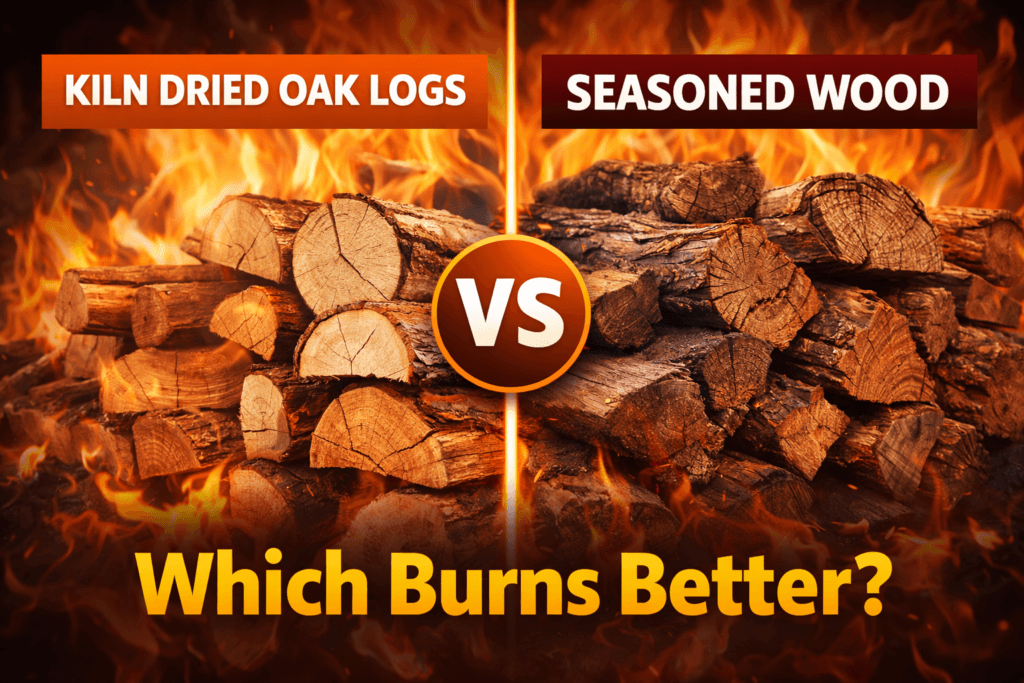
When comparing performance, cleanliness, and convenience, kiln dried oak logs clearly burn better than seasoned wood. Their low moisture content ensures high heat output, minimal smoke, and easy ignition. Seasoned wood can still be a viable option if properly dried, but results are often less consistent.
For those seeking dependable warmth, reduced maintenance, and a premium burning experience, Coughlan Fuels offers solutions designed to meet modern heating expectations.
FAQs
-Is kiln dried oak better than seasoned wood?
Yes, kiln dried oak typically performs better due to lower moisture content, resulting in higher heat output and cleaner combustion.
-Can seasoned wood burn efficiently?
Seasoned wood can burn efficiently if it has been dried correctly for a sufficient period, but results vary depending on storage conditions.
-Does kiln dried wood produce less smoke?
Yes, kiln dried wood produces significantly less smoke and residue compared to wood with higher moisture content.
-Is kiln dried wood ready to use immediately?
Yes, kiln dried logs are ready to burn straight away without any additional drying.
-Which option is better for wood-burning stoves?
Kiln dried oak logs are generally better for stoves because they burn hotter, cleaner, and more consistently.

Stay Connected With Us




Copyright 2024 © Coughlan Fuels
Website By Creative Digital