



What Level of Moisture Is Ideal for Firewood Logs? A Complete Guide
If you’ve ever tried lighting a fire that just won’t catch, or watched more smoke than flame coming off your logs, moisture content is almost always the culprit. For Irish homes relying on stoves and open fires through the winter, understanding wood moisture isn’t just a nice-to-know; it’s the difference between a warm, efficient evening and a smoky, wasteful one.
At Coughlan Fuels, we get asked this question daily by customers across Cork: “How dry does my firewood actually need to be?” Here’s everything you need to know, from the science behind moisture content to how to check it yourself before you light up.
Quick Summary
- Firewood should have a moisture content below 20% to burn cleanly, efficiently, and legally in Ireland
- Freshly cut wood can hold 45-50% moisture or more, so it needs proper drying before use
- Kiln drying brings moisture down to 15-18% quickly and consistently, unlike slower natural air drying (12-24 months)
- A simple moisture meter lets you test logs at home in seconds
- Buying pre-tested kiln-dried logs from a trusted Cork supplier removes the guesswork entirely
The Ideal Moisture Level: Under 20%
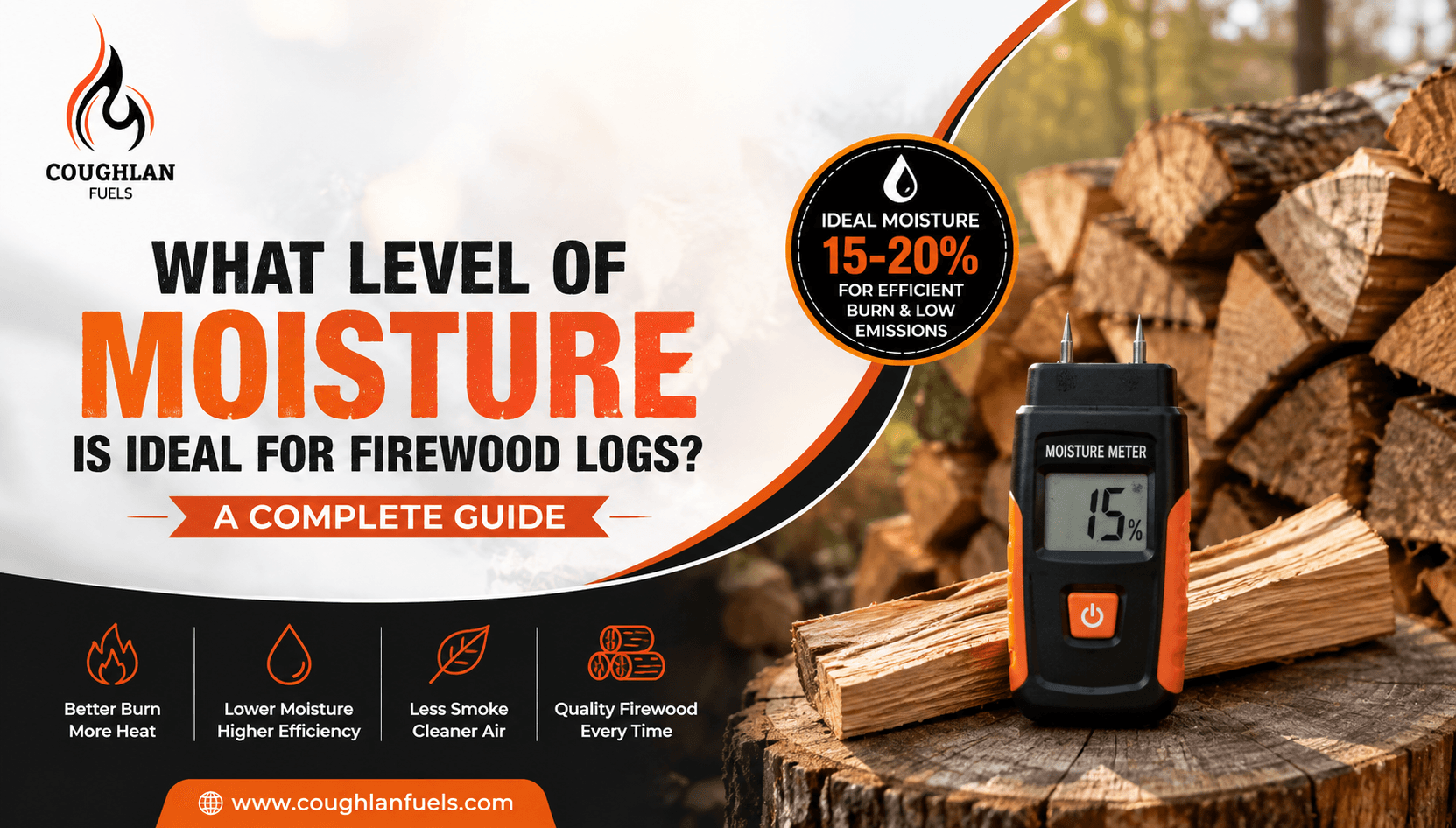
For firewood to burn cleanly and efficiently, its moisture content should sit below 20%. This isn’t just a suggestion since in 2022, Ireland’s solid fuel regulations made it a legal requirement for firewood sold in quantities under 2 cubic metres to meet this threshold.
Wood with moisture above 20% is considered “wet” or unseasoned, even if it looks dry on the outside. Freshly cut wood can hold 45-50% moisture or more, which means it needs proper time and processing before it’s fit to burn. This is measured as a percentage of the wood’s dry weight, so a log that’s technically “half water” is far more common straight off the tree than most people realise.
The 20% figure isn’t arbitrary either. It’s the point at which wood reliably ignites well, sustains a flame without excessive smoke, and releases the majority of its stored energy as usable heat rather than wasting it evaporating trapped moisture.
Why Moisture Content Matters So Much
Moisture content affects almost every aspect of how firewood performs once it’s in your stove or fireplace:
- Heat output: Wet wood wastes energy boiling off trapped water before it can actually burn, leaving you with less usable heat for the same amount of wood
- Smoke and creosote: High-moisture wood produces more smoke, which leads to creosote build-up in your chimney or flue — a genuine fire hazard over time, and one of the leading causes of chimney fires in homes that burn unseasoned wood
- Efficiency: Dry logs ignite faster, burn longer, and get more heat into your room rather than up the chimney, meaning you use less wood overall to stay warm
- Air quality: Under Ireland’s smoky fuel rules, burning wet wood contributes more to local air pollution, especially in built-up areas of Cork where smoke can settle and affect neighbours
- Stove health: Excess moisture causes tar and residue to build up inside stoves, which can shorten their lifespan, damage glass doors and seals, and increase maintenance costs over time
- Cost efficiency: Because wet wood burns less efficiently, you end up using more of it to achieve the same warmth, effectively costing you more per fire
Put simply, moisture content isn’t just a technical detail; it directly affects your comfort, your safety, and your wallet.
Kiln-Dried vs. Air-Dried: What’s the Difference?
There are two common ways firewood reaches that under-20% target, and understanding the difference helps explain why quality can vary so much between suppliers.
Air (seasoned) drying relies on natural weather conditions over 12-24 months. Logs are typically split, stacked off the ground, and left exposed to wind and sun while being protected from rain. It works, but it’s slow, and results can vary considerably depending on how the wood was stored, the tree species, log thickness, and the weather that year. A wet summer can leave “seasoned” wood well above the ideal moisture level even after a full year of drying.
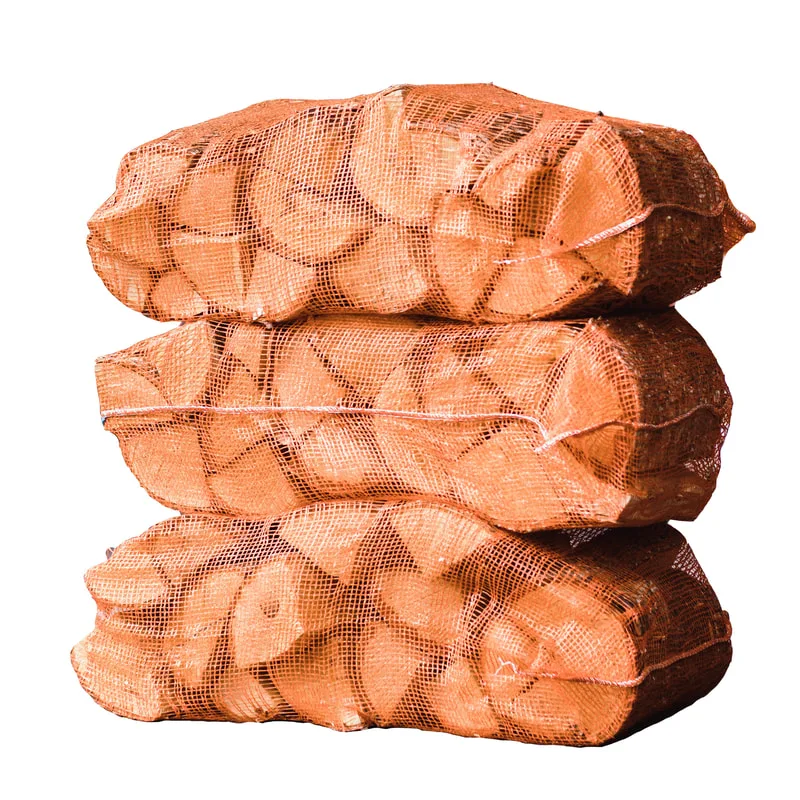
Kiln drying uses controlled heat in a purpose-built chamber to bring moisture down quickly and consistently, typically to 15-18%, comfortably within the legal limit. Because the process is controlled rather than left to the elements, every batch comes out to a predictable standard. This is why kiln-dried ash firewood has become the go-to choice for so many households across Cork; it delivers a hotter, cleaner, more predictable burn every time, regardless of how wet or dry the previous summer happened to be.
If you’re comparing the two in more depth, our guide on kiln-dried oak logs vs seasoned wood breaks down burn time and heat output side by side.
How to Check Your Firewood’s Moisture Yourself
You don’t need to take a supplier’s word for it. A simple moisture meter, widely available and inexpensive, lets you test logs at home in seconds:
- Split a log in half and test the freshly exposed inner face, not the outer bark, since the surface dries faster than the core and gives a misleadingly low reading
- Press the meter’s pins firmly into the wood along the grain for the most accurate result
- A reading of 20% or below means it’s ready to burn
- Anything higher should be dried further before use, either by kiln drying or extended air drying in a well-ventilated space
Beyond a meter, there are visual and physical clues that experienced fire-lighters rely on. Well-dried wood tends to be noticeably lighter than green wood of the same size, since much of its weight was water. The ends often show darkening and visible splits or cracks radiating outward, a natural result of the wood shrinking as it loses moisture. Two dry logs knocked together also tend to produce a sharper, more hollow-sounding knock compared to the dull thud of wet wood.
Where to Buy Reliably Dry Firewood in Cork
Not all firewood sold locally meets the same standard, which is exactly why sourcing from a trusted supplier matters. Some sellers label wood as “seasoned” without any real testing behind that claim, leaving buyers to discover the truth only once it’s smouldering rather than burning. If you’re searching for firewood for sale Cork or simply want dependable firewood Cork delivery without the guesswork, buying kiln dried stock takes the uncertainty out of the equation entirely.
At Coughlan Fuels Cork, every batch of kiln-dried logs is dried to below 20% moisture before it reaches your door, so you’re not left testing and hoping it burns well. Our process is consistent regardless of season, meaning the log you buy in December performs just as reliably as one bought in August. Browse our full range of kiln-dried logs or head to the shop to see current stock and pricing.
Frequently Asked Questions
What moisture percentage is best for firewood?
Under 20% is the standard for efficient, legal, low-smoke burning in Ireland. Kiln-dried logs typically measure 15-18%, giving extra margin above the legal minimum.
Is kiln-dried firewood always under 20% moisture?
Yes, reputable suppliers kiln dry their wood specifically to bring it well under the 20% threshold, which is why it’s a safer bet than unverified “seasoned” wood that hasn’t been tested.
Can I burn firewood with moisture above 20%?
It’s not illegal to own it, but selling firewood above 20% moisture in small quantities breaches Ireland’s solid fuel regulations. Burning it yourself will mean more smoke, less heat, and faster creosote build-up in your chimney, along with a higher long-term maintenance cost for your stove.
How long does it take for firewood to season naturally?
Air drying typically takes 12 to 24 months depending on wood type, log size, storage conditions, and weather. Kiln drying achieves the same or better result in a fraction of the time, with far more consistency.
Does ash firewood need less drying time than other woods?
Ash naturally has lower moisture content when freshly cut compared to woods like oak, which is part of why kiln-dried ash firewood is so popular. It reaches burn-ready condition efficiently and burns well even if slightly under-seasoned, though kiln drying still ensures the best, most consistent results every time.
Looking for reliable, kiln-dried firewood delivered across Cork? Get in touch with Coughlan Fuels or explore our full product range today.

Stay Connected With Us




Copyright 2024 © Coughlan Fuels
Website By Creative Digital