



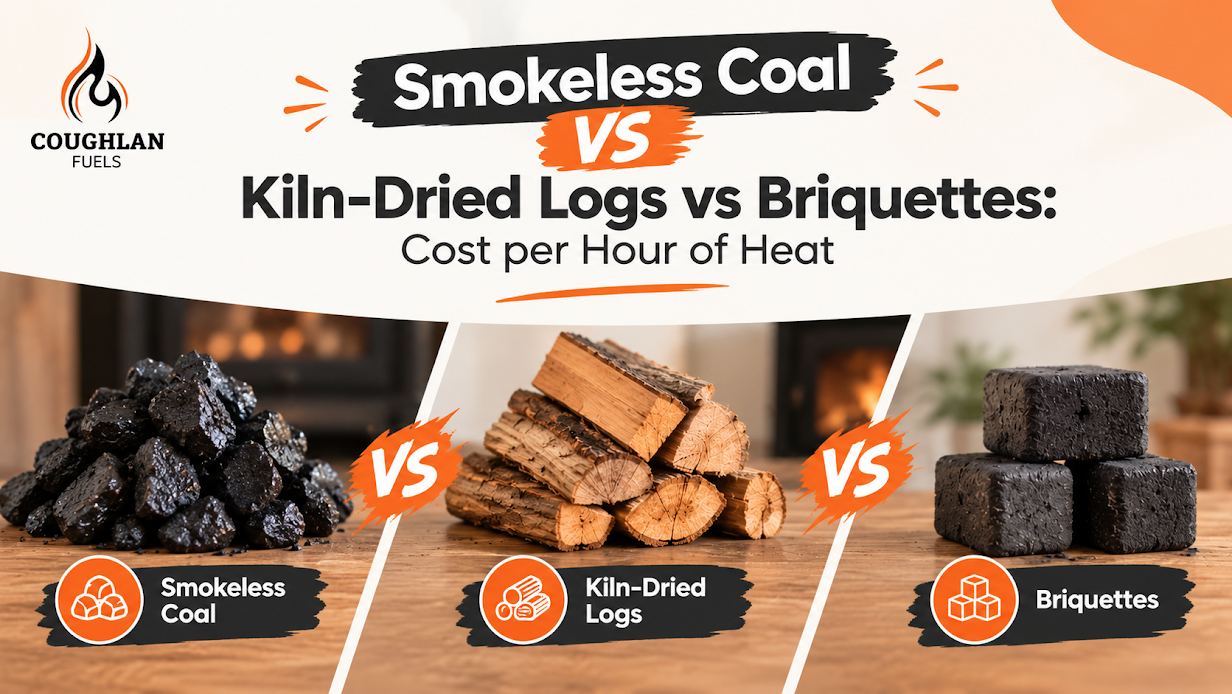
Quick Answer: For most stove owners, smokeless coal usually costs the least per hour of heat, kiln-dried logs often cost the most, and peat briquettes land in between. The gap depends on your local price per kilogram, since a kilogram of smokeless coal holds roughly twice the energy of a kilogram of logs. Use this

Quick Answer: A household that lights its stove most evenings usually needs about 1 to 1.5 stacked cubic metres of kiln-dried firewood for the winter. Occasional weekend fires may need only half a cubic metre, while a home that relies on a stove as its main heat source can burn 3 cubic metres or more.

Quick Answer There is currently no active recall affecting Flogas butane cylinders sold in Ireland. The only Flogas recall on record was issued in the UK in November–December 2024, affecting a small batch of Gold and Red butane cylinders sold through UK retailers (B&Q, B&M, Homebase) across the East Anglia, East Midlands, Home Counties and
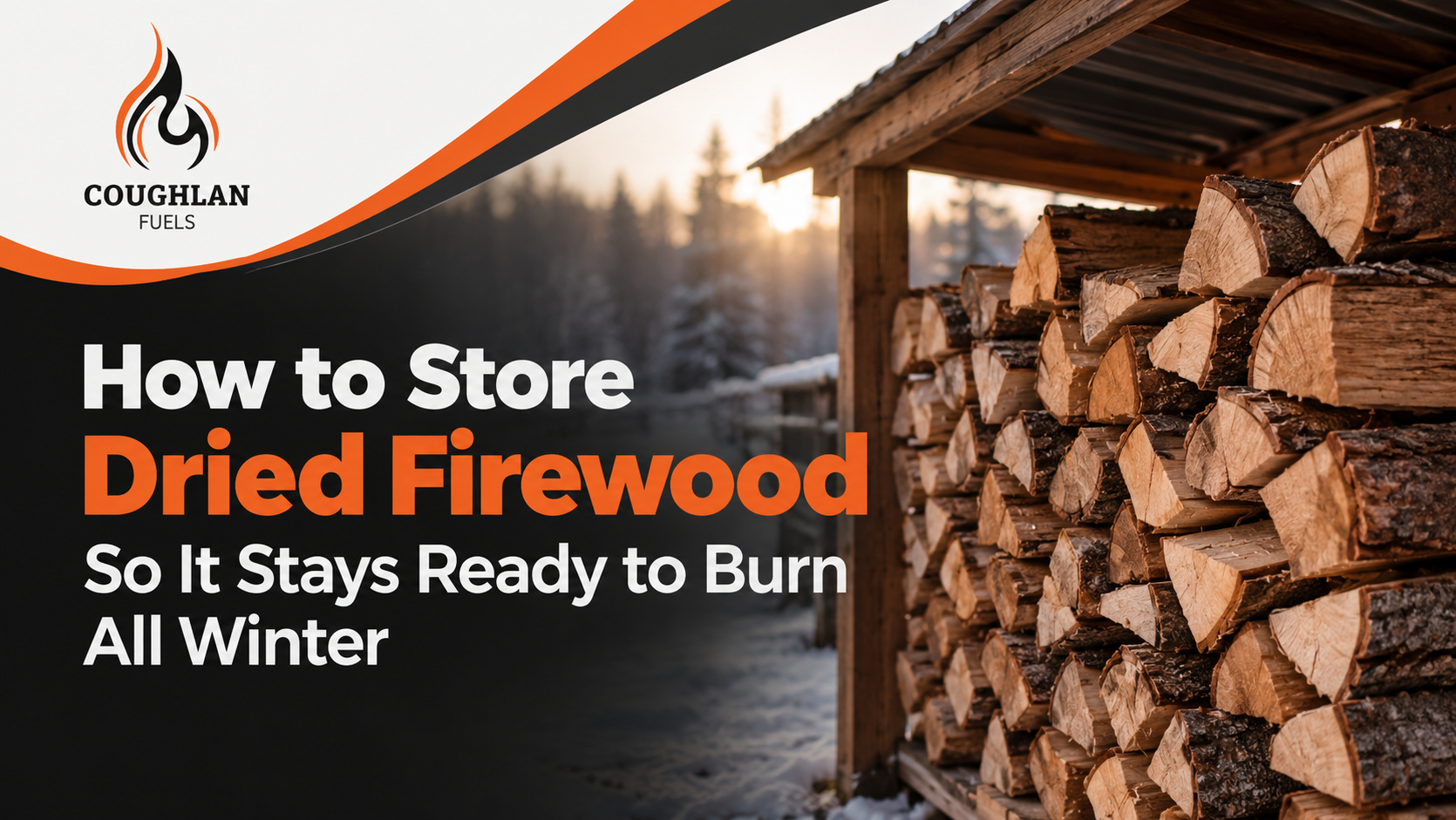
Quick Answer To keep dried firewood ready to burn all winter, store it off the ground, under cover, with good airflow on all sides. Avoid wrapping logs in airtight plastic, keep them away from your house walls to prevent damp transfer, and only bring in what you’ll burn within a day or two to stop
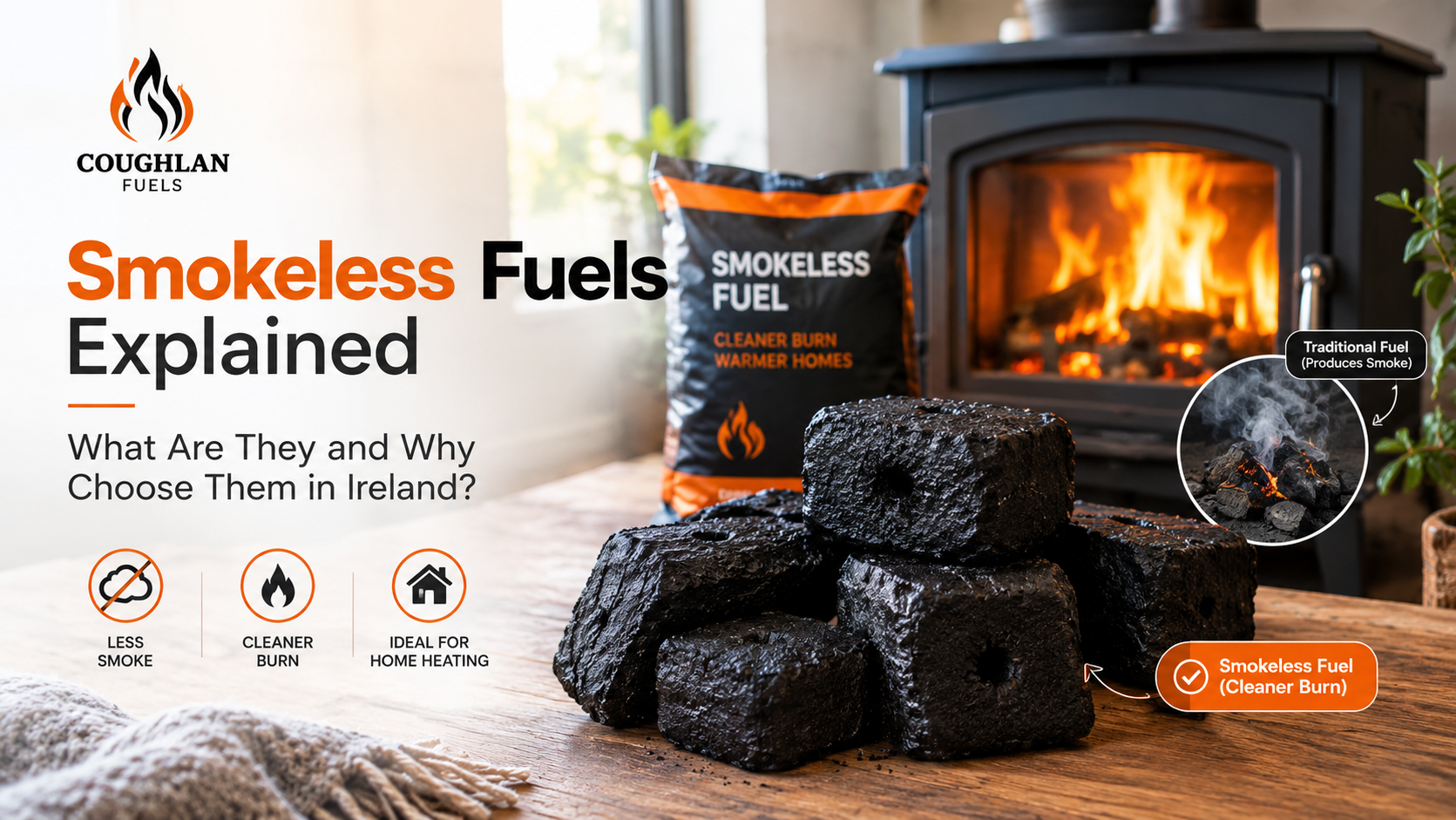
Quick Answer Smokeless fuels are processed solid fuels like smokeless coal ovoids, briquettes, and anthracite manufactured to burn with little to no visible smoke. They’re legally required in Ireland’s smoke control areas, produce less air pollution than traditional coal, and offer longer, more efficient burn times for home heating. If you’ve noticed “smokeless coal” or
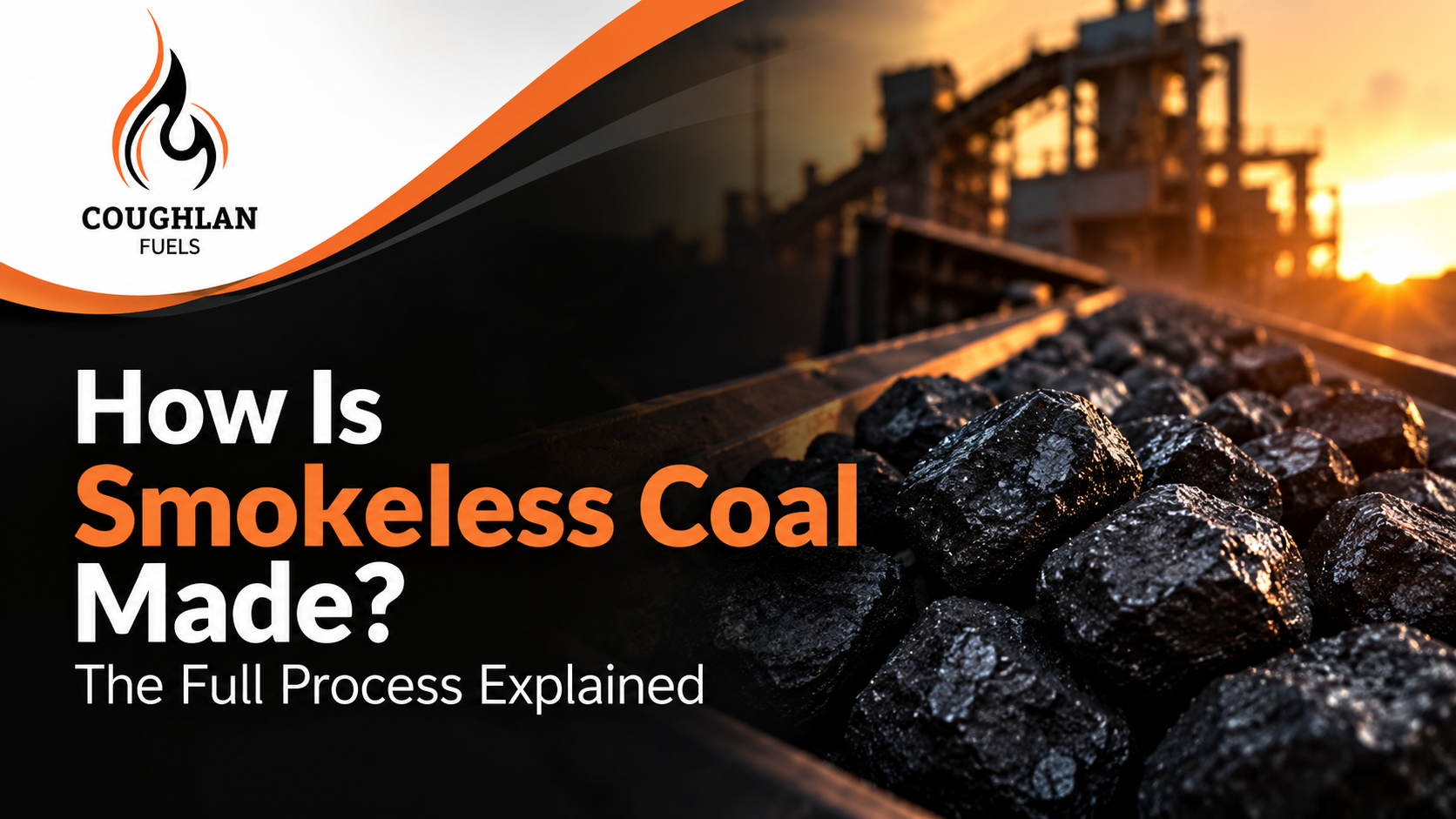
Quick Answer Smokeless coal is made by heating raw coal or coal-based materials in a low-oxygen environment (a process called carbonation) to burn off the volatile compounds that create smoke. The remaining carbon-rich material is crushed, mixed with a binder, and pressed into solid shapes, most commonly smokeless ovoids or smokeless coal ovals, which burn

It might feel odd thinking about firewood while the days are still long and the evenings are mild, but if you ask anyone who’s been caught short in a November cold snap, they’ll tell you: August is exactly when smart planning happens. Here’s why ordering your firewood now, rather than waiting for the first frost,

If you’ve ever tried lighting a fire that just won’t catch, or watched more smoke than flame coming off your logs, moisture content is almost always the culprit. For Irish homes relying on stoves and open fires through the winter, understanding wood moisture isn’t just a nice-to-know; it’s the difference between a warm, efficient evening

If you’ve ever come home on a wet Irish evening, loaded the stove with logs that hissed and smoked instead of catching, you already know why kiln-dried firewood has become the default choice for anyone serious about heating their home properly. It lights without a fight, burns cleaner, and does not leave you scraping tar
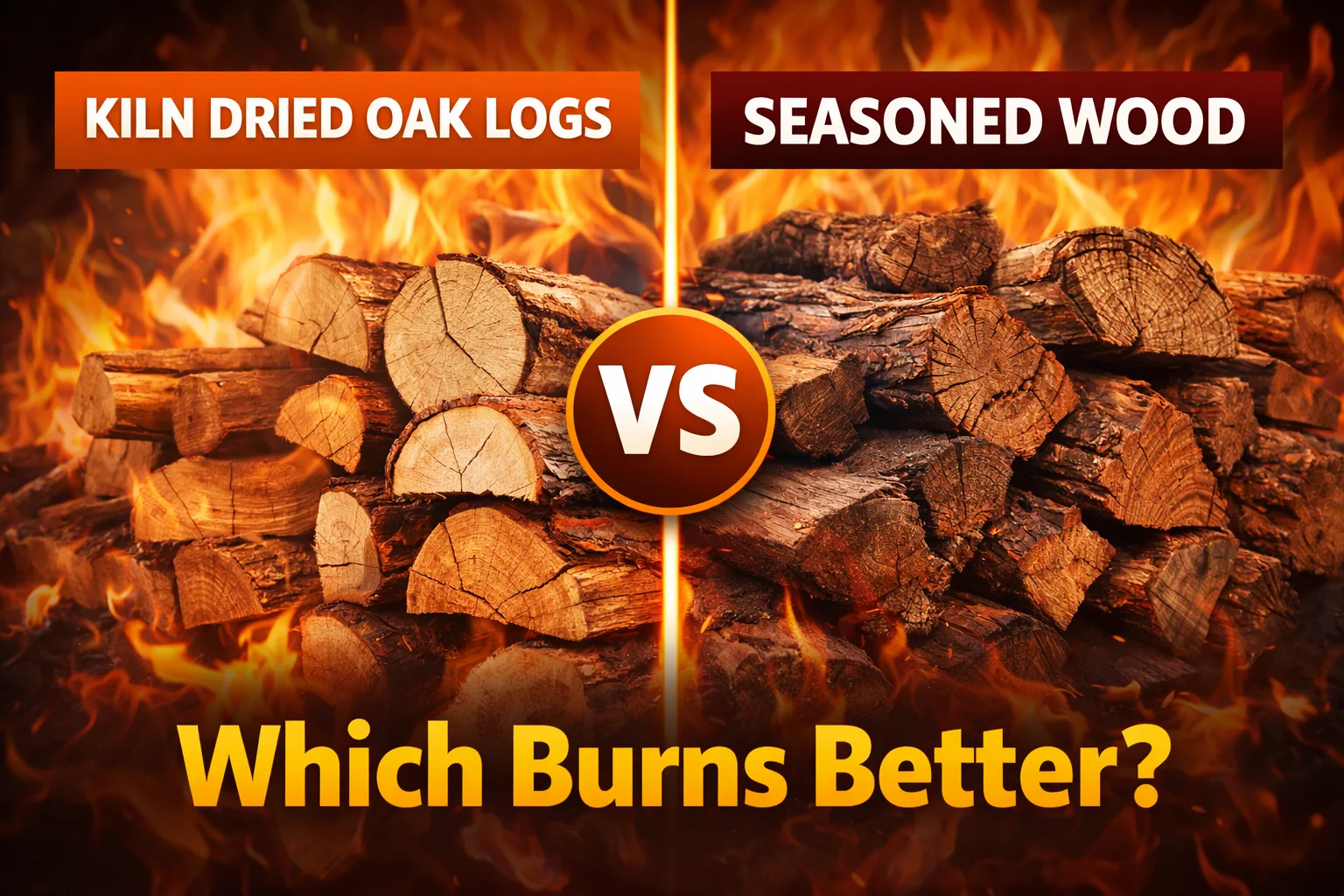
Choosing the right firewood makes a noticeable difference to heat output, efficiency, and overall experience. Two of the most popular options are kiln dried oak logs and seasoned wood. While both are commonly used for fireplaces and wood-burning stoves, they perform quite differently. Understanding these differences will help you choose the option that best suits
- 1
- 2

Stay Connected With Us




Copyright 2024 © Coughlan Fuels
Website By Creative Digital